Arakele
Challenge
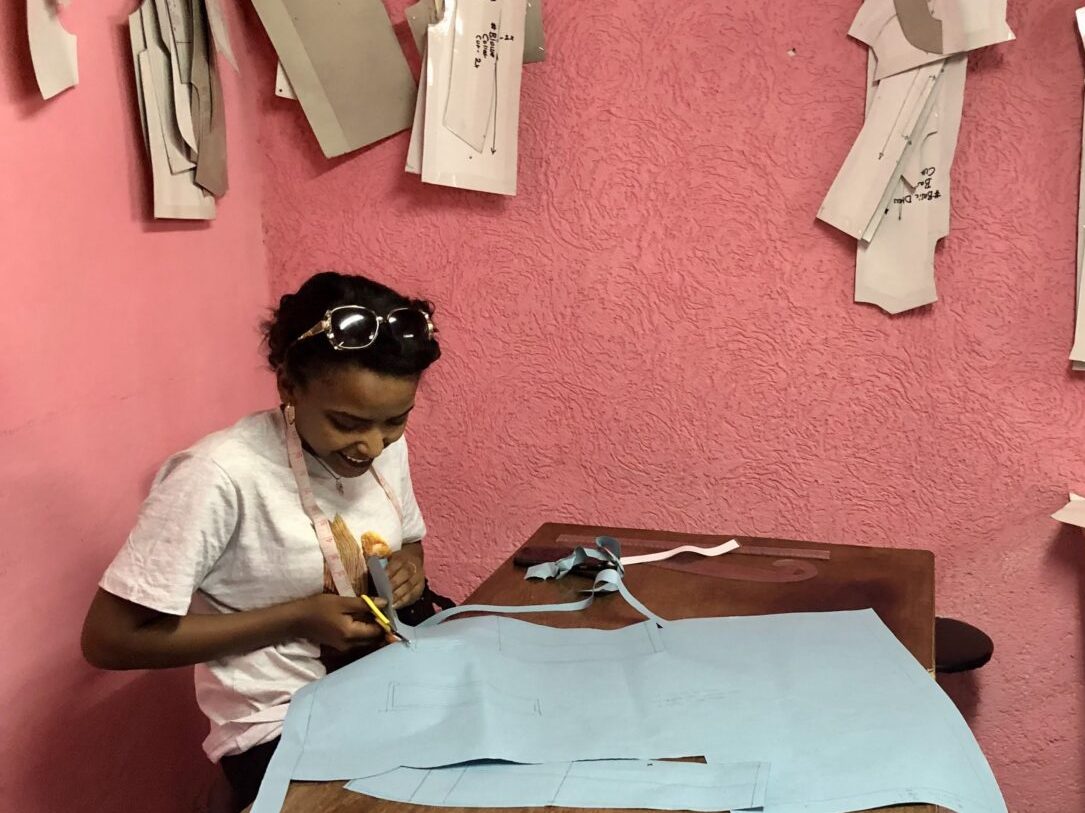
Arakele is a for-profit social enterprise fashion design college located in Addis Ababa, Ethiopia. The initial concept for the school was to provide underprivileged women with assistance in developing a marketable skill. Arakele earns most of its revenue from tuition paid by students who can afford the fees and product sales from its garment production division. As a social enterprise, Arakele provides scholarships to students who lack the funds to pay the school’s tuition.
While revenues from tuition and product sales were increasing, Arakele was not yet profitable and was actively looking for ways to buildout its overall long-term financial sustainability while also taking into consideration the risk of donor fatigue, its debt burden and rising costs. From a mission and impact perspective, any recommended solutions also needed to strengthen the school’s academics and the student journey.
Solution Part I: New Revenue Stream
Arakele had a proven theory of change, an established impact measurement and management process and was attentive to the student journey, but it still needed to increase its revenues and reevaluate its financing structure to move towards profitability. To help it do so, I first conducted a revenue stream and asset analysis alongside a SWOT (strengths, weaknesses, opportunities and threats) analysis.
The analyses revealed several important factors that I synthesized to develop my proposed solution:
- Education & Employment: Arakele had a proven track record with respect to effectively educating and facilitating employment for marginalized women, and its key drivers of success were its values, leadership and staff, supporters and building and location.
- Relationship with Government: Arakele had an established working relationship with the federal government as an official technical and vocational education and training school and had been awarded status of model school.
- Relationship with Textile Industry: Arakele’s production division had established relationships with the local textile industry and many of the school’s students had gone on to work for local textile houses, so valuable goodwill existed in these relationships.
- Modernization & Development of the Textile Industry: Modernization and development of the textile and garment industry was a key priority for the Ethiopian government both in terms of job creation and exports. Given the sector’s importance to the country’s economic growth, combined with the lack of reliable skilled labour, funding opportunities were available for organizations that could assist with the required development.
The proposed solution was to expand the school’s education and training activities into the textile sector, which would enable Arakele to:
- Benefit from available funding opportunities. In particular, the World Bank had partnered with Ethiopia’s Ministry of Labour and Skills to launch the US$80 million Skills for Job Development Fund (SJDF), which used outcomes-based contracting (OBC) to provide funding to existing government approved schools focused on training programs for high-demand skills that also demonstrated employment outcomes. The fund also required training providers to meet the needs of the local economy, provide soft skills training and focus on serving women or other marginalized groups, and presented a strong funding option for Arakele.
- Generate additional revenues from its core competency, which could be spread across its existing infrastructure and operational costs.
- Complement its existing offerings by covering more of the textile and garment manufacturing value chain.
- Reinforce its mission and increase its impact by strengthening academics and the student journey.
- Tap into unmet demand for training and strategic partnership opportunities with the government and textile industry, while also building its profile and refining its unique selling proposition.
Solution Part II: External Fundraising Strategy
The OBC nature of the SJDF fund meant that it did not address the upfront capital needs of training providers and Arakele needed to raise external funding to support the capital needs (for instructors, equipment, etc.) of the expansion without exacerbating existing financial tensions. To help it do so, I also conducted a fundraising and financing analysis to secure aligned funding that would support both the business and its social goals.
The analysis highlighted the need for flexible, low-cost investment and working capital that the school could repay once it started receiving outcome payments from the fund. Given the existing debt burden, taking on additional debt was deemed to be unsound and raising equity was not a favoured option per the existing owners. Finally, given existing donor dependency, it was considered prudent to pursue new donor options or existing donors not at risk of fatigue.
The proposed solution was to raise innovative grant funding in the form of a forgivable loan or recoverable grant from a funder with an aligned social impact mission. This approach would enable Arakele to repay the funds or have the loan forgiven only if outcome payments were received; given the high likelihood of outcomes being achieved (as discussed above) this was viewed as a strong recommendation. Traditional grant funding was also proposed and several potential funder options were presented to Arakele, including:
- Diplomatic Spouses Group of Ethiopia – Project Matrix: An association that funds initiatives focused on income generation for vulnerable groups, such as women.
- Open Road Alliance: A bridge lender operating in Ethiopia that specializes in unblocking critical impact capital for mission-driven organizations focused on reducing inequality. It specifically works with organizations dealing with funding paid in arrears (like outcome payments) and has been experimenting with innovative grant funding vehicles.
- Mastercard’s Young Africa Works Program – Ethiopia: A foundation that supports organizations helping young women to find dignified and fulfilling work in specific sectors, including manufacturing.
Note: While Arakele is a real social enterprise and the circumstances of the organization as presented are based on fact, this case was completed as part of my practical coursework for the Executive Masters in Social Business and Entrepreneurship programme, which is jointly run by the London School of Economics’ Department of Management and the Marshall Institute, which works to improve the impact and effectiveness of private action for public benefit through research, teaching and convening.
Sources:
- Arakele Fashion Design College. (n.d.). Helping Ethiopian Women Create Sustainable Opportunities.
- Arakele Fashion Design College and Garment Production PLC. (2019). Annual Report 2019-2020.
- Gihon Partners. (2020). Sustainability Pathway 2020-2025 for Arakele Fashion Design College.
- Gihon Partners. (2020). Impact Framework for Arakele Fashion Design College.
- International Labour Organization (ILO). (July 12, 2022). Skills for Trade and Economic Diversification in Ethiopia: A background paper for drafting of a Sector Skills Strategy for the Garment sector in Ethiopia.
- World Bank. (2023). Project Information Document: Ethiopia Education and Skills for Employability.
- Patton Power, A. (2024, February 21). Innovative Revenue Streams for MG4H2E Foundations of Social Business II Executive Masters in Social Business and Entrepreneurship. London School of Economics and Political Science.
- Patton Power, A. (2021). Adventure Finance: Introduction to Redesigning Risk Capital.
 Grace & Goode | Social Business Consulting